University of Virginia: Admissions, Rankings, and Student Life
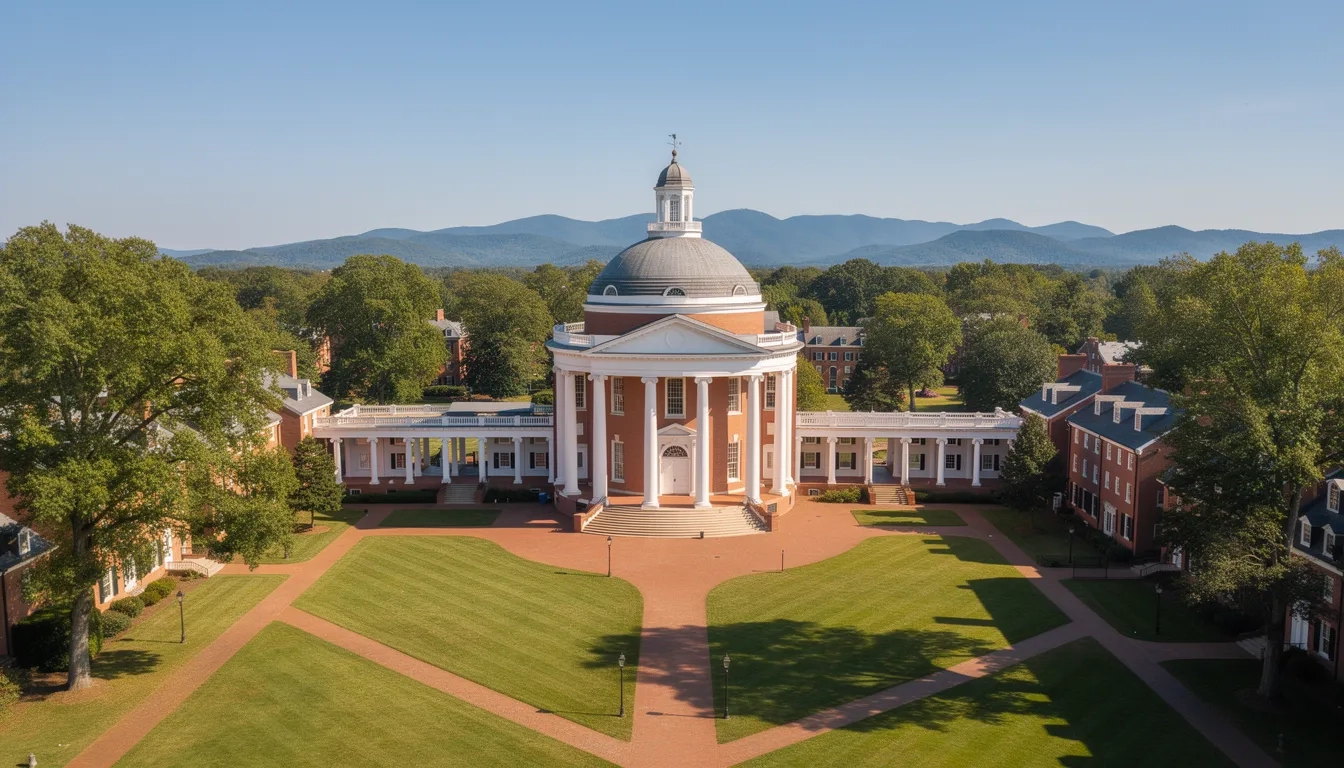
The spring 2026 admissions cycle confirmed something that high school counselors have been whispering for a few years: the University of Virginia is no longer a "safer" alternative to the Ivies. With 82,118 applications for the Class of 2030 — a single-year jump of 27.4%, the largest in the university's history — UVA has entered a new tier of selectivity. It now sits comfortably alongside schools like Georgetown and Carnegie Mellon in the national conversation. If you're planning to apply, or you're just curious about what makes this place tick, here's what the data and the people on Grounds actually reveal.
Where UVA Stands in the Rankings
UVA holds the #4 spot among public universities in the 2026 U.S. News & World Report rankings, tied with the University of North Carolina at Chapel Hill. In the broader national university ranking (public and private combined), it comes in at #26.
But the number that deserves more attention than its ranking position is UVA's graduation rate: 96%, the highest of any public university in the country. That's not a small edge. Most flagship state schools sit in the 75-85% range. A 96% rate signals something real about academic support, student-faculty engagement, and institutional culture.
The school also ranks #2 among public universities for best value, according to U.S. News's 2026 value index. For families weighing sticker price against outcomes, that combination matters.
| Ranking Category | UVA Position (2026) |
|---|---|
| Top Public Schools (U.S. News) | #4 (tied with UNC) |
| National Universities (all) | #26 |
| Best Value (public) | #2 |
| Graduation Rate (public) | #1 — 96% |
Rankings shift year to year, and I'd argue the graduation rate is a more durable signal than any single list position. It reflects what happens after a student enrolls, not just who gets in.
The Admissions Numbers — What They Actually Mean
For the Class of 2030, UVA received 82,118 applications and admitted 10,287 students — an overall acceptance rate of 12.53%. That's a meaningful tightening from the Class of 2029, which saw a 16.81% rate from 58,951 applicants.
The surge was driven almost entirely by out-of-state interest. Out-of-state EA applicants jumped by 43.7% in a single cycle. That's a seismic shift, and it compressed the out-of-state acceptance rate down to 9.8% in the Early Action round alone.
Here's where it gets practical for applicants:
- Virginia residents: ~22-23% acceptance rate (protected by state law requiring two-thirds of each class to be Virginia residents)
- Out-of-state students: ~10% overall, dropping closer to 7% in Regular Decision
- International students: roughly 10%, similar to OOS
The gap between in-state and out-of-state odds is one of the largest of any flagship university. For a Virginia resident, UVA is a legitimate target school. For an out-of-state student with a 1480 SAT and a 3.9 GPA, it's a reach.
Application Strategy: Round Choice Matters More Than Most Students Realize
This is the part most families underestimate. Application round selection at UVA shifts your odds dramatically.
For the Class of 2030:
- Early Decision (binding) — 24% acceptance rate, roughly 5,108 applicants
- Early Action (non-binding) — 12.4% acceptance rate, 57,495 applicants
- Regular Decision — approximately 7% for out-of-state applicants
Early Decision is the clearest lever available to serious applicants who have UVA as a genuine first choice. The 24% rate is nearly double the RD rate. Given that UVA added binding ED fairly recently (it used to operate only EA and RD), many students haven't adjusted their strategy yet.
If UVA is your first choice, applying ED isn't just a psychological commitment — it's a statistical one. The difference between a 24% and a 7% rate is not trivial.
One more thing worth knowing: for the Class of 2030, UVA removed all supplemental essay prompts except one narrow creative option for nursing applicants. The admissions office said the change was meant to "reduce stress and anxiety of high school students." Whether that's the full story or not, it does mean your application rises and falls more heavily on grades, test scores, and the Common App personal essay.
Academic Profile: Who Actually Gets In
The admitted student profile at UVA is academically top-heavy, even by flagship standards. Here's what the enrolled Class of 2029 looked like:
- 90.5% reported a high school GPA of 4.0 (weighted)
- 84% ranked in the top 10% of their high school class
- SAT middle 50%: 1410–1520
- ACT middle 50%: 32–35
- 59.4% submitted test scores (UVA is currently test-optional for fall 2026)
A few things to unpack here. That 90.5% figure for 4.0 GPAs is weighted GPA, which means most applicants are loading up on AP and IB courses. A 3.8 unweighted from a rigorous private school curriculum reads differently than a 4.0 from a school with few AP options — and UVA's admissions team is sophisticated enough to know the difference.
The test-optional policy creates its own wrinkle. Among the 40.6% of admitted students who didn't submit scores, we don't have full visibility into how non-submitters fared versus submitters. The general consensus among college counselors is that applicants with strong scores (above the 50th percentile for admitted students) should still submit them.
Over five years, applications have climbed from 40,878 to over 82,000 while admitted class size stayed relatively flat near 9,500-10,000. That math tells you everything about where this trajectory is heading.
Student Life and What Living on Grounds Is Actually Like
First thing to know: at UVA, you don't live on campus. You live "on Grounds." You're not a freshman — you're a "first-year." These aren't arbitrary quirks. They trace back to Thomas Jefferson's founding philosophy that education is a lifelong pursuit, not something that ends with a diploma. That mindset permeates the culture in ways that feel either genuinely inspiring or mildly precious, depending on your tolerance for institutional mythology.
The social ecosystem is broad. Over 800 student organizations cover everything from mock trial to South Asian dance. About one-third of undergraduates participate in Greek life, which is visible but not dominant — students regularly describe it as easy to have a full social life without it.
A few specifics about what daily life looks like:
- First-year students are required to live on Grounds
- The university is actively expanding upperclass housing, aiming to have all second-years living on Grounds by 2030
- NCAA Division I athletics draw significant student energy, particularly basketball and soccer
- Charlottesville itself (a walkable, food-rich college town) functions as a genuine extension of campus social life
78% of students report feeling "extremely safe and secure" on campus, which is high for a school of UVA's size (roughly 17,000 undergraduates).
The architectural setting is worth mentioning because it genuinely affects the experience. The historic Lawn — designed by Jefferson and now a UNESCO World Heritage Site — sits at the center of campus life in a way that makes UVA feel unlike most large research universities. It's not just a backdrop; a small group of fourth-year students actually live in the historic rooms along the Lawn each year (an honor students apply for competitively).
The Honor Code: A Living Institution, Not a Formality
UVA's Honor System is one of the oldest student-run honor codes in the country, dating to 1842. During Convocation, every incoming first-year signs the Honor Code. Violations — lying, cheating, or stealing — are adjudicated by a jury of student peers, not administrators. The single sanction is expulsion (or "dismissal" in UVA terminology).
This matters more than it might sound. The Honor Code shapes classroom culture in a specific way: professors frequently allow unproctored exams, and there's an implicit trust operating between students and faculty that most universities simply don't have. Students who thrive in that kind of environment often cite it as one of the most formative parts of the UVA experience.
The Code also generates real controversy. The "single sanction" rule — where the only punishment for any honor violation is dismissal — has been debated internally for decades. Students have voted on modifying it multiple times. The fact that it survives in its strict form reflects how seriously the UVA community takes the underlying principle, even when it produces hard outcomes.
The student self-governance model extends beyond the Honor Code. Student-run organizations handle a surprising range of institutional functions, from the student newspaper (The Cavalier Daily, founded 1890) to judicial processes. It's a genuine governance model, not a token advisory role.
Charlottesville and the Broader UVA Experience
Location shapes the experience in ways that rankings don't capture. Charlottesville sits in the foothills of the Blue Ridge Mountains, about 2.5 hours from Washington D.C. It's consistently ranked among the best small cities in America for quality of life. The restaurant and arts scene is genuinely strong for a city of 50,000 — this isn't a company town where the university is the only game.
That said, UVA's relatively isolated setting means the social life is more self-contained than at urban universities. Most of the social gravity pulls toward Grounds-adjacent neighborhoods, the Corner (the strip of bars and restaurants adjacent to campus), and fraternity row. Students who want a city backdrop for their college years often find Charlottesville charming but limiting.
The "preppy and social" culture that CollegeVine respondents frequently describe reflects demographic reality: UVA skews toward students from private and suburban high schools, particularly in Virginia. The university has made public commitments to improve first-generation and Pell-eligible student enrollment, but the cultural center of gravity remains squarely upper-middle-class. That's worth knowing before you apply.
Bottom Line
- Apply Early Decision if UVA is genuinely your first choice. The 24% ED rate versus ~7% Regular Decision for out-of-state applicants is a real, actionable difference.
- Virginia residents have a structurally protected advantage (~22% acceptance rate). If you're in-state with strong grades and a 1420+ SAT, UVA should be on your match list, not your reach list.
- Out-of-state applicants with sub-1450 SAT scores should treat UVA as a reach and build their list accordingly. Applying test-optional only makes sense if your scores fall below the 25th percentile (1410 SAT).
- The 96% graduation rate and #2 public university value ranking make UVA one of the strongest return-on-investment schools in the country at the public university price point.
- The Honor Code and self-governance culture are genuine differentiators — if that model appeals to you, lean into it in your personal statement.
Frequently Asked Questions
Is UVA harder to get into than it used to be?
Yes, significantly. The overall acceptance rate dropped from 22.58% in 2021 to 12.53% for the Class of 2030 — roughly cut in half over five years. Applications have more than doubled in the same period, while class size has stayed nearly flat. The trend shows no signs of reversing.
Does applying Early Action actually help your chances at UVA?
Early Action gives you a modest advantage over Regular Decision — the EA rate for the Class of 2030 was 12.4% versus roughly 7% for out-of-state RD applicants. But Early Decision (binding) gives a much larger boost, around 24%. EA is non-binding and worth applying if you're ready, but it's not the same as ED.
What GPA do you need to get into UVA?
UVA doesn't publish a minimum GPA cutoff, but 90.5% of enrolled students in the Class of 2029 had a weighted 4.0. Realistically, admitted students outside that range are strong in other areas (exceptional essays, unique background, significant accomplishment) or are in-state students with other compelling factors.
Is Greek life a big deal at UVA?
About one-third of undergraduates join fraternities or sororities, which is meaningful but not overwhelming. The social scene has enough breadth — through clubs, athletics, and Charlottesville itself — that students consistently report having full social lives without participating in Greek life. It's more visible at UVA than at some peer schools, but not a prerequisite for belonging.
What makes UVA different from other top public universities?
A few things stand out: the 1842 student-run Honor System, Jefferson's founding architecture (a UNESCO World Heritage Site), the "Grounds" culture and "first-year" terminology, and a 96% graduation rate that no other public university matches. The self-governance tradition is genuine — students administer the Honor Code through peer juries, not administrators.
Is UVA test-optional for 2026 applicants?
Yes, UVA is test-optional for fall 2026 admission. However, if your SAT or ACT scores fall at or above the middle 50% (1410-1520 SAT, 32-35 ACT), submitting them strengthens your application. The test-optional policy is more helpful for applicants whose scores fall below those thresholds.
Sources
- U.Va. offers admission to record number of 7,151 EA applicants for the Class of 2030 - The Cavalier Daily
- University of Virginia (UVA) Admissions Statistics 2025 — The Koppelman Group
- See where Virginia universities ranked in U.S. News' 2026 list - Axios Richmond
- Life at University of Virginia | CollegeVine
- UVA ascends to No. 2 best value among public universities in U.S. News ranking