Fordham University: Programs, Rankings, and Student Life
Fordham doesn't get covered the way the Ivies do — and that gap in attention probably costs some qualified students a genuinely good option. Ranked #97 among National Universities by U.S. News and seated inside one of the world's densest job markets, Fordham occupies a specific niche that is easy to underestimate from the outside: a Jesuit university with two New York City campuses, a law school that ranks #3 in part-time programs nationally, and a business school that climbed 16 spots in Poets&Quants rankings in a single year. If you're figuring out whether Fordham belongs on your list, the answer depends entirely on what you're trying to accomplish.
Two Campuses, One University — A Real Choice
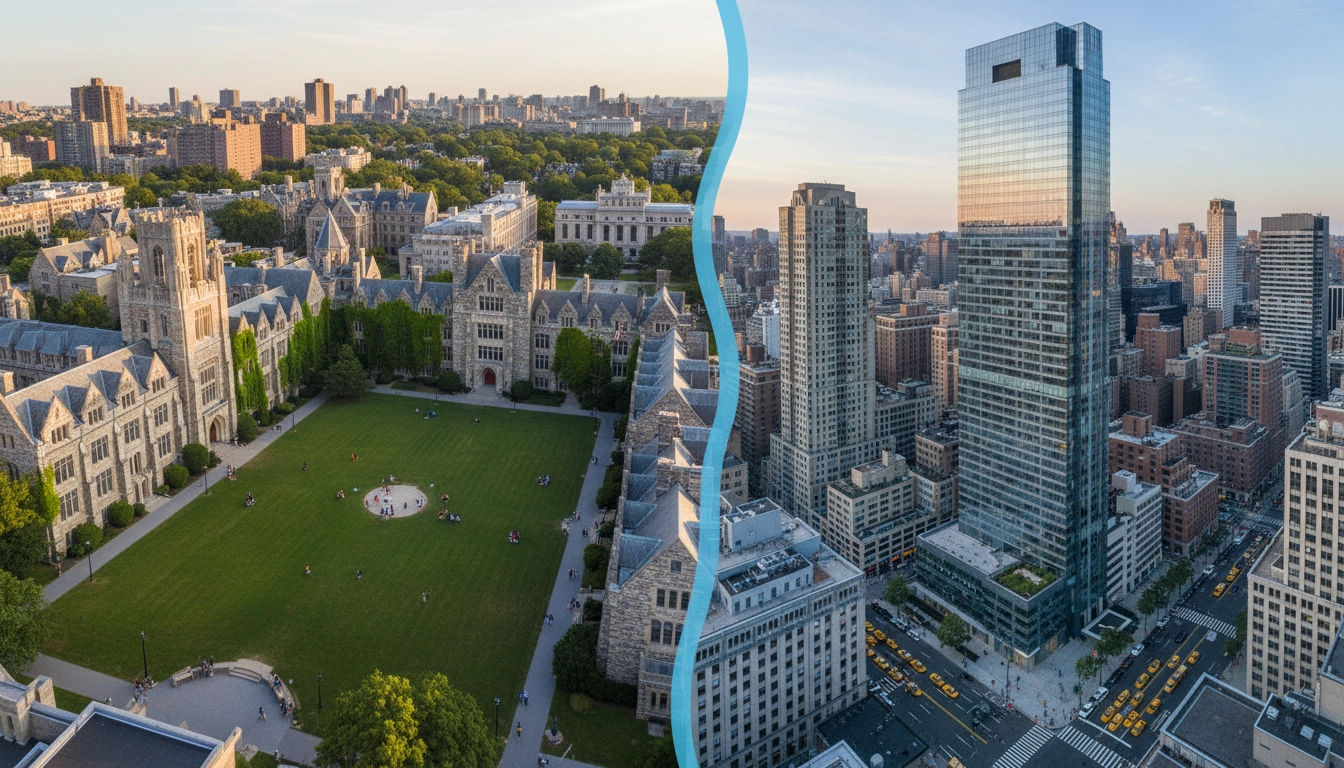
The first thing to understand about Fordham is that it isn't one campus. It's two genuinely different ones, and choosing between them shapes your entire undergraduate experience.
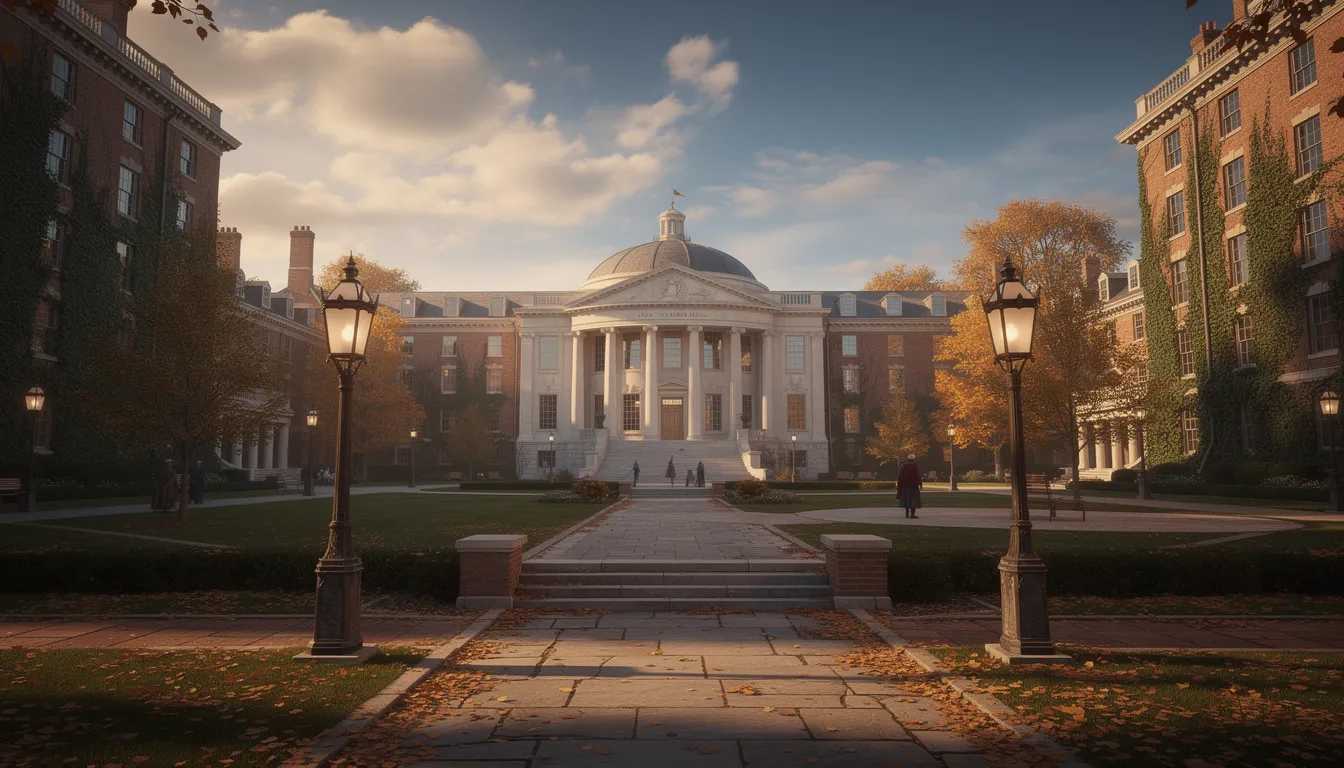
Rose Hill sits in the Bronx on 85 acres of gothic stone buildings and actual grass. Home to roughly 6,320 undergraduates, it has the feel of a traditional residential campus: tailgates, a swimming pool, the kind of quadrangle where students sit between classes. The biological sciences, chemistry, pre-med track, and most humanities programs live here. The Metro-North station is on campus property — Manhattan is a real 20-minute train ride, not a marketing claim.
Lincoln Center is two city blocks on the Upper West Side of Manhattan. About 2,968 undergrads study here, surrounded by jazz clubs and the Metropolitan Opera House. Dance, theatre, and arts administration are exclusive to Lincoln Center. The campus is vertical, the energy urban, and the commute to a midtown internship is measured in subway stops rather than train rides.
The cultures diverge noticeably. The Fordham Observer has reported that these differences drive some students to pursue internal transfers between campuses. That's not a dysfunction — it's evidence that these really are two distinct undergraduate experiences sharing a name, a Jesuit mission, and a core curriculum.
The practical rule: apply to the campus where your major actually lives. Biology and pre-med students belong at Rose Hill. Future dancers, stage directors, and arts administrators belong at Lincoln Center.
Programs That Move the Needle
Fordham's academic reputation concentrates in specific, well-defined areas. Business comes first.
The Gabelli School of Business has been on a measurable upward trajectory. The full-time MBA jumped from #62 to #58 in U.S. News rankings, and the Poets&Quants ranking moved 16 places — from #60 to #44 — between 2023 and 2025. The Financial Times placed the full-time program at #78 globally and #36 among U.S.-based business schools. The specialized rankings are where Gabelli competes with schools that have far higher overall university placements:
| Gabelli Program | U.S. News Ranking |
|---|---|
| Executive MBA | #13 (tie) |
| Accounting | #10 |
| Finance | #12 |
| International Business | #10 (tie) |
| Marketing | #14 (tie) |
| Entrepreneurship | #13 (tie) |
| MS Quantitative Finance | #15 (QuantNet) |
An accounting program ranked #10 nationally means Fordham actively competes for Big Four recruiting attention alongside schools whose overall rankings sit far above #97.
Law is the other headline. The Fordham School of Law ranks #39 overall in U.S. News graduate programs. But the part-time program sits at #3 in the country, trailing only Georgetown and Northwestern. The clinical training program (#19), trial advocacy (#9), and dispute resolution (#21) rankings signal a school that takes practice-oriented legal education seriously — graduating lawyers who can actually practice, not just pass the bar.
For technology careers, Fordham's MS Computer Science program reports a 94% placement rate with graduates landing median starting salaries above $95,000. The 14:1 student-to-faculty ratio helps: small seminar sections at the graduate level are where that ratio actually matters.
Rankings: The Honest Picture
The headline number — #97 in National Universities — deserves honest framing.
Fordham's overall ranking has drifted downward in recent years. The Fordham Ram, the university's campus newspaper, has covered the drops directly and without spin. This isn't a secret. Rankings methodologies shift, and Fordham's trajectory in the U.S. News undergraduate ranking has not been upward.
But that number is also not the full picture. Globally, Fordham places in the top 5.2% of institutions worldwide, ranked 1,081 out of 20,966 universities assessed by the Center for World University Rankings. More usefully, its #25 position in Best Undergraduate Teaching (U.S. News) is a durable signal that the classroom experience holds up — that ranking doesn't move as much as the overall number because it reflects something harder to game: how faculty actually engage with undergraduates.
The teaching ranking matters more than people realize. A school ranked #97 overall with #25-ranked undergraduate teaching often delivers better classroom experiences than a school ranked #40 where research output takes clear priority over instruction.
Princeton Review added Fordham to its Top Green Colleges list for 2025, recognizing environmental curriculum and campus sustainability initiatives. Small recognition, but worth knowing if that matters to your selection criteria.
The summary read: overall ranking has slipped, professional school rankings have climbed, teaching quality ranking holds strong. Which number matters depends on what you're going to school for.
Student Life: What New York Actually Provides
Most universities describe their city location as an advantage. At Fordham, the advantage is concrete and recurring.
Students at Rose Hill have a Metro-North station on campus. At Lincoln Center, the front door opens onto Columbus Avenue. The internship pipelines into Manhattan's financial district, media companies, publishing houses, and law firms aren't aspirational — they're operational. Students describe access to internships as one of Fordham's defining characteristics in campus surveys.
262 registered student organizations span academic societies, cultural groups, performing arts, and service clubs. Fordham has no Greek life — no fraternities, no sororities. For students who want that experience, it's a real gap. For students who don't, social life organizes differently: around club sports, theater productions, campus events, and the city's own gravity. The absence of Greek life shapes the culture in ways that aren't immediately obvious; power dynamics, social hierarchies, and weekend social structures all look different without it.
Athletic programs run 21 varsity teams under Atlantic 10 Conference membership. Basketball generates the most campus energy. Rose Hill hosts all varsity sports facilities, including Jack Coffey Field and the Col. Francis B. Messmore Aquatic Center (one of the more complete athletic facilities at a non-flagship private university). Intramural and club sports round out options for students who want to compete without the varsity commitment.
Student demographics are 59% female and 41% male, with 58% of undergrads coming from New York, New Jersey, and Connecticut. Students from 65+ countries create international representation that shows up most visibly in courses focused on global business and policy. Campus culture leans progressive and service-oriented (shaped deliberately by the Jesuit mission around community engagement), though students frequently note that the social scene also reflects the reality that many attendees come from upper-middle-class or wealthier families.
Admissions and the Cost Reality
Acceptance rate: 56%. That makes Fordham moderately selective — a genuine reach for some applicants, a realistic target for students with GPAs above 3.5 and strong extracurriculars. The university doesn't require standardized test scores from all applicants, though strong SAT/ACT results still support merit aid consideration.
Tuition runs approximately $58,082 per year for undergraduates. Add housing, dining, fees, and books (in New York City, where off-campus costs are high) and the total cost of attendance climbs well past $75,000 annually.
Here's where the math matters: 79% of first-year students receive need-based financial aid. The average net price for federal loan recipients drops to $41,004 — still significant, but that's the real number most families face, not the sticker price.
| Cost Metric | Amount |
|---|---|
| Annual tuition | ~$58,082 |
| Average financial aid package | ~$30,000 |
| Average net price (loan recipients) | $41,004 |
| 4-year graduation rate | 76% |
| Student-to-faculty ratio | 14:1 |
The 76% four-year graduation rate is decent but not exceptional for a school at this selectivity level. Students who extend timelines often cite the cost of NYC living and major changes as contributing factors.
The Jesuit Core: What It Actually Means for Students
Fordham's Jesuit identity isn't branding — it shapes what every undergraduate studies. The core curriculum requires coursework in philosophy, theology, English composition, history, and natural sciences regardless of major. That's not a distribution checkbox; it's a structured program designed to build what faculty call "soft skills and the development of you as a person."
Students and employers both notice. Fordham graduates consistently show up in employer feedback as strong writers and communicators, attributes that trace back to a writing-intensive core that most business-focused universities don't require.
The service-oriented culture is equally real. Community volunteering, activism, and ethics-grounded coursework aren't peripheral — they're embedded. For students who want a university where those values shape daily campus life rather than appearing only in the admissions brochure, Fordham delivers.
Who Actually Thrives Here
My honest read: Fordham is a strong choice for students who know they want to work in New York, care about business, law, media, or the arts, and want a liberal arts foundation woven through professional training.
Students who struggle tend to fall into two groups. First, those who wanted a large flagship state university experience — big Greek life, major football culture — and ended up disappointed. Second, those who underestimated how much living in or near New York City changes the texture of college life. The city is an asset, but it's also expensive, loud, and competitive in ways that a rural campus simply isn't.
If you want Fordham to work for you, treat the city as a classroom from day one. The students who get the most out of it aren't waiting for campus life to come to them — they're booking internship interviews sophomore year and using the train like they own it.
Bottom Line
- Business and law are Fordham's strongest professional bets. Gabelli's accounting (#10) and finance (#12) rankings compete nationally, and the Law School's part-time program (#3) is best-in-class for working professionals.
- Choose your campus deliberately. Rose Hill and Lincoln Center are genuinely different environments. Applying to the wrong one and hoping to transfer later is a gamble not worth taking.
- Run the net price math, not the sticker price. With 79% of first-year students receiving need-based aid and an average net price of $41,004, the real cost lands well below the $58,082 headline figure for most families.
- NYC is the curriculum. If proximity to internships, professional networks, and cultural institutions directly serves your goals, Fordham's location carries more value than its U.S. News ranking suggests.
- The overall ranking has drifted. The professional school rankings have climbed. Pick the number that actually corresponds to what you plan to study.
Frequently Asked Questions
Is Fordham University a good school for business?
Yes, specifically for certain programs. The Gabelli School of Business ranks in the top 10-15 nationally for accounting (#10), finance (#12), executive MBA (#13), and international business (#10) according to U.S. News. The full-time MBA program climbed to #44 in Poets&Quants rankings for 2024-2025, a 16-spot jump in one year. For students targeting careers in New York's financial sector, Gabelli's employer relationships in the city add practical weight beyond the rankings.
What is the difference between Fordham's Rose Hill and Lincoln Center campuses?
Rose Hill is an 85-acre traditional campus in the Bronx housing most undergraduate programs — sciences, business, humanities, and all varsity athletics. Lincoln Center is a compact urban campus on Manhattan's Upper West Side, home to dance, theatre, and arts administration programs. Students apply to a specific campus, and the cultures differ meaningfully: Rose Hill feels like a residential college, Lincoln Center feels like an urban conservatory environment.
Is Fordham's ranking declining?
The overall U.S. News National Universities ranking has dropped in recent years — a trend The Fordham Ram has covered openly. However, Fordham's professional school rankings have moved in the opposite direction: the Gabelli MBA, Law School specialty rankings, and teaching quality ranking (#25 in Best Undergraduate Teaching) have held strong or improved. Whether this matters depends on your program of interest.
Does Fordham University have Greek life?
No. Fordham has no fraternities or sororities. Social life centers on 262+ registered student organizations, varsity and intramural athletics, campus events, and New York City itself. Students who prioritize Greek life in their college search should know this upfront — it's a consistent gap mentioned in campus reviews.
How much does Fordham cost after financial aid?
Tuition runs approximately $58,082 per year, but 79% of incoming students receive need-based financial aid. The average net price for federal loan recipients is $41,004 annually — the number that reflects what most families actually pay. The final figure varies significantly by household income and financial aid package, so running Fordham's Net Price Calculator before comparing it to peer schools is worth the 15 minutes.
What are Fordham's strongest undergraduate programs?
Finance, accounting, communications, global studies, and film consistently rank as Fordham's strongest undergraduate offerings. The pre-law pipeline is well-regarded, given the Law School's strength in trial advocacy and clinical training. For the arts, Lincoln Center's dance and theatre programs attract serious students specifically because of their location within New York's professional arts community.
Sources
- Rankings | Fordham University
- Fordham University Profile | US News Best Colleges
- Gabelli School Graduate Rankings on the Rise | Fordham
- Fordham University | The Princeton Review
- Fordham University 2026: Courses, Fees, and Rankings Explained | Amber Student
- Team Rose Hill or Lincoln Center? | The Fordham Ram
- Fordham University Ranking 2025 | CWUR