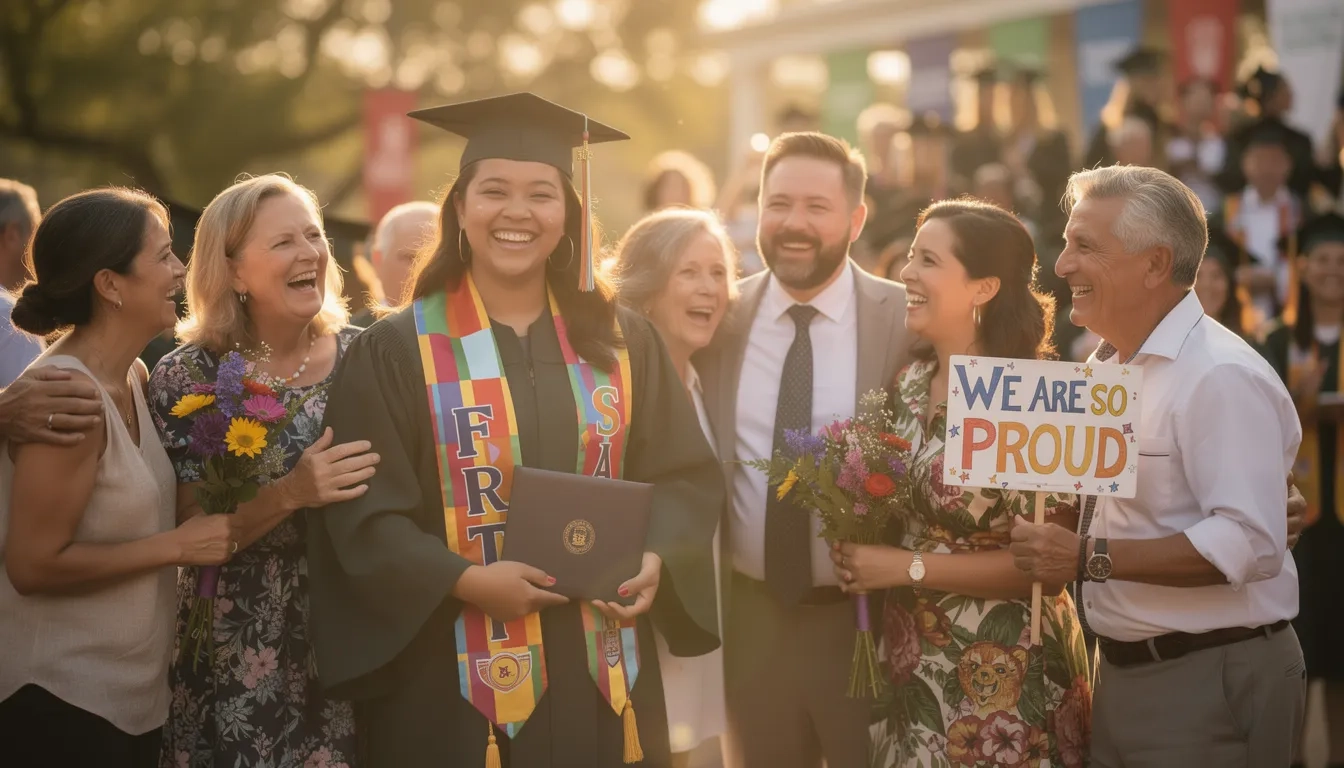
Babson College: Rankings, Programs, and Student Life Explained
A college with fewer than 4,000 students, sitting in a leafy Boston suburb, ranked #2 in the entire United States by the Wall Street Journal — ahead of Harvard, Princeton, and MIT. Two years running. That's Babson College, and if your first reaction is "how?", you're asking exactly the right question.
The Rankings: Consistent, Specific, and Data-Backed
Babson holds one of the more unusual positions in American higher education: a small, specialized school that competes head-to-head with major research universities on outcome-based rankings. The Wall Street Journal's methodology doesn't care about endowment size or Nobel laureates on faculty. It measures how well a college prepares graduates for financial success — and on that metric, Babson has been relentless.
Among the top 10 schools in the 2026 WSJ ranking, Babson placed first in four subcategories: Learning Opportunities, Career Preparation, Learning Facilities, and Student Recommendations. Only Stanford finished ahead of it overall. President Stephen Spinelli Jr. attributed the result to "the tremendous success of our students and alumni and their impact on the world."
US News & World Report has named Babson the #1 school for undergraduate entrepreneurship for 29 consecutive years. The MBA program has held the same top spot for 32 years. Those aren't short streaks. They represent a school that built a specific identity and refused to drift from it.
| Ranking Source | Category | Rank |
|---|---|---|
| Wall Street Journal (2026) | Best College in America | #2 |
| US News & World Report | Undergrad Entrepreneurship | #1 (29 years) |
| US News & World Report | MBA Entrepreneurship | #1 (32 years) |
| MONEY Magazine | Best Colleges for Business Majors | #1 |
| Payscale (2024) | Mid-Career Salary Potential | #5 |
Payscale's 2024 College Salary Report puts the median salary for Babson alumni with 10+ years of experience at $181,400. That figure appears repeatedly in Babson's materials — with good reason. It's the single clearest argument for the school's return on investment.
The Academic Core: Everyone Starts a Real Business
Every first-year undergraduate at Babson takes Foundations of Management and Entrepreneurship (FME) — not just business students, not just entrepreneurship concentrators. Everyone. It's the defining feature of the curriculum and genuinely unlike anything at a comparable school.
In FME, student teams launch an actual business. They handle marketing, accounting, operations, and management, then liquidate the company at year's end. Profits go to charity. The experience converts abstract business frameworks into real decision-making under real constraints — before most students have declared a major. No case studies. No simulations. Real money, real customers, real consequences.
This course anchors what Babson calls "Entrepreneurial Thought & Action" — the school's teaching philosophy connecting theory directly to practice. It's a philosophy, not a course catalog item. It shapes how professors teach, how students get evaluated, and how the school frames everything from accounting to operations.
Students who want to specialize further can concentrate in entrepreneurship, adding coursework in opportunity recognition, resource acquisition, and new venture creation. The Arthur M. Blank School for Entrepreneurial Leadership (named after Home Depot co-founder and Atlanta Falcons owner Arthur Blank) serves as the institutional hub for this work, housing faculty, research centers, and student programs.
Beyond entrepreneurship, Babson runs concentrations in accounting, analytics, finance, marketing, law, real estate, and technology, among others — across 11+ academic divisions. "Business school" undersells the actual range.
Graduate Programs: MBA and Specialized Master's
Babson's full-time MBA runs 21 months. Every student, regardless of track, takes an "Entrepreneurship and Opportunity" core course — because the school's position is that entrepreneurial thinking belongs in every management role, not just a founder's. Students who want to specialize add 9 credit hours of electives covering New Venture Creation, Entrepreneurial Finance, and Managing a Growing Business.
Customized tracks exist for technology ventures, social impact, family business, and corporate entrepreneurship. The MBA class of 2024 averaged a starting salary of $77,681 — the program's highest figure on record, published annually in Babson's outcomes report.
Several master's programs carry STEM designation, which matters more than most schools acknowledge. STEM-designated programs extend Optional Practical Training (OPT) eligibility for international graduates from 12 months to 36 months. Given that international students make up a significant portion of the student body, this is a material benefit.
Graduate options include:
- Full-Time MBA (21 months, on-campus Wellesley)
- MBA for Working Professionals (evening and hybrid formats)
- Master's in Accounting (STEM-designated)
- Master's in Business Analytics (STEM-designated)
- Master's in Finance (STEM-designated)
- Master's in Management (designed for recent undergrads)
Admissions: What the 17% Acceptance Rate Actually Means
The current acceptance rate sits at 17.09% — selective, but not the 4–6% rates that define the most competitive schools. Applications jumped by 17.34% (that's 1,386 additional applicants) in the most recent cycle, suggesting the WSJ ranking coverage is meaningfully raising Babson's profile.
Babson has been test-optional for multiple admission cycles. What the admissions team is actually screening for isn't a score profile — it's demonstrated curiosity about business and entrepreneurship. A prior venture, a relevant internship, active involvement in business clubs, or essay content that reflects real engagement with how organizations work all carry weight here.
Babson met 96% of demonstrated financial need for enrolled students — a figure that puts it alongside institutions with far larger endowments.
The full cost runs to $83,126 per year for 2024-2025 (tuition alone is $58,560; the rest covers housing, dining, and fees). That list price looks alarming. But 34% of first-year students received need-based aid, with an average grant of $51,791, bringing the average net price down to $34,790. Run the official Net Price Calculator before drawing conclusions from the sticker price.
Campus Life in Babson Park
The campus sits in Babson Park — a neighborhood within Wellesley, Massachusetts, 14 miles west of Boston. Quiet, green, and suburban. Nothing like a large state university with a stadium visible from the highway. That's by design: the school's small size creates a different kind of intensity.
Babson fields 23 NCAA Division III varsity teams including basketball, soccer, lacrosse, cross country, and field hockey, plus 24 club sports and a full intramural program. Division III athletics means no athletic scholarships — students compete because they want to, while carrying full academic loads. The Len Green Recreation and Athletics Complex houses the Staake Gymnasium (two full basketball courts) and the Lunder Fitness Center with free weights and machines.
Student organizations number more than 100 on Babson's campus alone. But Babson belongs to the BOW consortium with Olin College of Engineering and Wellesley College — which opens cross-registration and expands available clubs to 175+ across all three campuses. That's a meaningful social and academic expansion for a school of Babson's size.
Some standout organizations on campus:
- CODE (Community of Developers & Entrepreneurs) — tech and startup-focused
- Investment Club — manages a real student-run portfolio
- Black Student Union and 20+ cultural organizations representing global backgrounds
- Babson Dance Ensemble and Improv Troupe for students who want creative outlets
- Six fraternities and sororities for students who want that social structure
Boston is 14 miles away with commuter rail access, which extends the professional and social reach. Students regularly hold Boston internships during the academic year.
Career Outcomes: The Argument That Closes the Case
This is where Babson makes its clearest argument to prospective students. 97.8% of the Class of 2025 was employed, continuing their education, or in a volunteer or service program within six months of graduation. That's near-total placement, and it reflects both strong career services and the genuine reputation Babson has built with employers over three decades of consistent top-ranked programming.
The $181,400 mid-career median puts Babson alumni in the same salary conversation as graduates from schools with vastly larger endowments and name recognition. My honest read: for students who know they want to work in business, startups, or entrepreneurial environments, Babson's documented outcomes are hard to match at any size school. Whether the cost is right depends almost entirely on your individual aid package, not the list price.
Bottom Line
Babson is a specialized school that has out-executed much larger institutions on the metrics that matter most to students after graduation.
- The rankings reflect real outcomes. #2 nationally (WSJ 2026), #1 for entrepreneurship for nearly three decades — this isn't brand momentum, it's salary and placement data.
- The FME course is genuinely different. No other school asks every first-year student to run an actual business. That experience compounds across four years in ways the alumni salary data makes visible.
- Run your actual aid numbers. The $83,126 list price is a ceiling, not a floor — average aid recipients pay $34,790. Babson meets 96% of demonstrated need, so the Net Price Calculator is worth your time before ruling it out.
- Fit matters as much as outcomes. Babson's culture is entrepreneurially-oriented by design. Students who arrive energized by that environment thrive; students who want a more traditional liberal arts college experience may find the focus narrow.
Frequently Asked Questions
Is Babson College only for people who want to start a company?
No — and this is the most persistent misconception about the school. Babson's entrepreneurial framework teaches problem-solving, team-building, and decision-making under uncertainty, skills that transfer directly into consulting, investment banking, corporate strategy, and nonprofit leadership. A significant portion of graduates go into large-company roles, not just funded startups.
What is Babson College's acceptance rate right now?
The most recent acceptance rate is 17.09%, placing Babson in moderately selective territory. Applications increased 17.34% in the latest cycle as the WSJ rankings have raised the school's visibility. Babson has been test-optional for multiple cycles, so a missing SAT or ACT score won't sink an otherwise strong application.
How much does Babson College actually cost after financial aid?
Full cost of attendance runs about $83,126 per year (2024-2025), covering tuition, housing, dining, and fees. But the average need-based grant for first-year recipients was $51,791, bringing average net price to $34,790. Babson met 96% of demonstrated financial need for enrolled students — an unusually high rate for a school of this size.
What makes Babson's MBA different from a standard business school MBA?
Every Babson MBA student takes entrepreneurship as a required core course, not an elective. The curriculum centers on venture creation, scaling, and entrepreneurial leadership — with specialized tracks for tech, social impact, family business, and corporate roles. The average starting salary for 2024 MBA graduates was $77,681, the program's highest figure ever recorded.
Does Babson's suburban location limit career opportunities?
Less than you'd expect. The campus is 14 miles from Boston with commuter rail access, and students routinely hold Boston internships during the academic year. The BOW consortium with Olin and Wellesley Colleges also expands academic cross-registration and the combined social scene. For students who want a major urban campus, it's worth visiting — but proximity to Boston addresses most practical career concerns.
What is the social scene like at Babson?
More professionally oriented than a typical college. Pitch competitions, startup events, and networking dinners fill the calendar alongside traditional student activities. Six fraternities and sororities give students a Greek option, but they coexist with a culture that's genuinely focused on business and building things. For students who want a large state-school atmosphere, Babson will feel small and focused — which is either a feature or a bug depending on what you're looking for.
Sources
- Wall Street Journal 2026 Ranking — Babson Thought & Action
- Babson College Rankings and Accolades
- Foundations of Management and Entrepreneurship — Babson College
- Undergraduate Student Life — Babson College
- Class Profile and Acceptance Rate — Babson College
- Babson College Profile — US News Best Colleges